
"early European coffeehouses"
28000 article(s) found

Explore the independent coffee shop in Mudu and savor the life of petty bourgeoisie in Shanghai
The exchange of professional baristas please follow the coffee workshop (Wechat official account cafe_style) Shanghai petty bourgeoisie is knowledgeable, pay attention to taste in life, dress in style, eat exquisite, play to choose special, like to go to bookstores and art parks, the pursuit of taste and flavor, rather than simply stacked with money Tuhao brand. As early as the 1920s, rich ladies in Shanghai lived a life of taste.

Introduction to the manor treatment of Puerto Rico coffee grinding scale varieties
In Spanish, Puerto Rico means the port of wealth. The history of coffee in Puerto Rico dates back to 1736, when coffee seedlings were brought into the country by early Spanish settlers. In the 18th world, sugar cane was the main economic crop, so little attention was paid to it. At the beginning of the 19th century, the French began to move from the Mediterranean island of Corsica because of European politics.

Bolivia | Caranavi producing area Esso Coffee Farmers' Association European rules traditional washing of extremely hard beans SHB wind
Professional coffee knowledge exchange more coffee bean information please follow the coffee workshop (Wechat official account cafe_style) Bolivia | Esso Coffee Farmers Association (God's Love processing Plant) European traditional washed very hard beans SHB flavor? The Bolivian Coffee production Alliance (Federation of Coffee Export), which has made repeated achievements in improving Bolivian coffee quality and international visibility in recent years.

Introduction of La Reis Yaoke Coffee in San Pedro Manor, Puerto Rico
In Spanish, Puerto Rico means the port of wealth. The history of coffee in Puerto Rico dates back to 1736, when coffee seedlings were brought into the country by early Spanish settlers. In the 18th world, sugar cane was the main economic crop, so little attention was paid to it. At the beginning of the 19th century, the French began to move from the Mediterranean island of Corsica because of European politics.

Taste the coffee culture and take a look at the famous cafes in Europe
Europe is a beautiful continent with overlapping mountains and rivers, varied and poetic: it is dotted with countless medieval castles, Roman or Gothic churches, preserved medieval villages, wooden-framed cabins, and the tranquil and elegant field scenery that can linger back and forth. But what people yearn for most is the coffee culture in Europe. If coffee
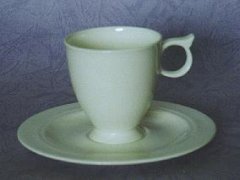
German Hutschenreuther Lion Coffee Cup
Lion porcelain is known as the largest porcelain group in Europe. Because of its excellent quality and creativity, many products are treasured by collections all over the world. Its tableware can be seen on the streets of European royalty, American state banquets and Arab banquets. The founder of Lion Brand, Karamayi. He Zhenrode (HUTSCHENREU-THER), born in 1794, learned porcelain decoration in his father's factory from an early age. 18 years old

A brief introduction to the treatment method of grinding degree and baking degree of fine coffee beans in Mercedes Manor
Coffee originated in the early 1990s, guerrilla warfare greatly damaged the country's national economy, reducing coffee production from 3.5 million bags in the early 1970s to 2.5 million bags in 1990 and 1991. The eastern part of the country was most affected by guerrilla warfare, and many farmers and workers were forced to leave the manor. The shortage of funds has led to a sharp drop in coffee production, from 1200 kg per hectare in the past to per hectare today

Is mixed coffee the same as blended coffee?
Early decaf refers to a method in which raw beans expand in high-temperature steam, absorb solvents that destroy caffeine, and then release solvents and their residues in high-temperature steam. The factory then encapsulates it with dichloromethane, which prevents it from being affected by other flavors. But because dichloromethane escapes into the air, it destroys the ozone layer.

A brief introduction to the history and culture of the origin and development of boutique coffee beans in Mercedes Manor with balanced taste
In the early 1990s, guerrilla warfare greatly damaged the country's national economy, reducing coffee production from 3.5 million bags in the early 1970s to 2.5 million bags in 1990 and 1991. The eastern part of the country was most affected by guerrilla warfare, and many farmers and workers were forced to leave the manor. The shortage of funds has led to a sharp drop in coffee production, from 1200 kg per hectare in the past to less than 9 per hectare today.

An introduction to the History and present situation of Mocha Coffee
(1) the origin of mocha coffee is in Yemen, and the origin of mocha coffee is very wide. These coffees have their own characteristics and certain differences in terms of quality and taste. However, because these coffees have been shipped and exported from the port of Mocha in Yemen to markets around the world, they are collectively called mocha coffee. The port of Mocha is located on the coast of the Red Sea north of the Mande Strait, overland distance from Aden

A brief introduction to the cultivation of fine quality coffee beans in Mercedes Manor, geographical location, climate and altitude
In the early 1990s, guerrilla warfare greatly damaged the country's national economy, reducing coffee production from 3.5 million bags in the early 1970s to 2.5 million bags in 1990 and 1991. The eastern part of the country was most affected by guerrilla warfare, and many farmers and workers were forced to leave the manor. The shortage of funds has led to a sharp drop in coffee production, from 1200 kg per hectare in the past to less than 9 per hectare today.

Introduction to the characteristics of Larez Yaoke Coffee Flavor Manor in Puerto Rico with acidic taste
In Spanish, Puerto Rico means the port of wealth. The history of coffee in Puerto Rico dates back to 1736, when coffee seedlings were brought into the country by early Spanish settlers. In the 18th world, sugar cane was the main economic crop, so little attention was paid to it. At the beginning of the 19th century, the French began to move from the Mediterranean island of Corsica because of European politics.

Elegant floral aroma, acidity, meticulous and soft Puerto Rican boutique coffee grinding degree treatment method of baking degree
The whole history of coffee in the Caribbean has a lot to do with Spanish reclamation. Coffee was not that important in the 18th century. The main job was to grow sugar-producing crops in fertile valleys. In the early 19th century (1800), the residents of Corsica in the French Mediterranean moved to Puerto Rico because the valleys had been occupied by Spanish immigrants.

This is probably the most expensive cafe in Tianjin_coffee fragrance soaked in the old days
I like to go to interesting cafes and have a drink. I can save a lot of interesting things. They are like secrets hidden in my heart. Whose beans are fresh and which barista can talk. Which cafe music is the most suitable for my stomach. La Clique on Xinhua Road is listed in the list of collection cafes. White walls with black door frames seem to be French streets.

Fragrant Puerto Rican Coffee with strong Grinding degree; introduction to varieties of fine coffee beans in producing areas
In Spanish, Puerto Rico means the port of wealth. The history of coffee in Puerto Rico dates back to 1736, when coffee seedlings were brought into the country by early Spanish settlers. In the 18th world, sugar cane was the main economic crop, so little attention was paid to it. At the beginning of the 19th century, the French began to move from the Mediterranean island of Corsica because of European politics.

What is the gourmet ratio of golden cup hand-made coffee
The proportion of SCAA refined cup coffee defined by the Gold Cup Fine Coffee Association of the United States and the European Fine Coffee Association of scae, the extraction rate of coffee must be about 20%, while the TDS (concentration ratio) is about 1.1% to 1.3%. For Drip Filter dripping and brewing, how to extract the best coffee flavor is controlled by two factors: the extract of coffee powder and the concentration in a cup of coffee.

Description of the Flavor of Santo Domingo Coffee introduction to the method of taste treatment in producing areas of varieties
Santo Domingo Coffee Flavor description Grinding scale Variety production area Taste treatment method introduction: most of the ancient buildings for viewing are concentrated in the old city. Piaget Street was the busiest area in the early days of Santo Domingo, flanked by various ancient European palaces and temples: the Goran Palace, built from 1510 to 1512, was the Government House of the first Governor Diego; it was built from 1503 to 1508

Introduction to the method of taste treatment of coffee grindability characteristics and flavor description in San Pedro Manor, Puerto Rico
In Spanish, Puerto Rico means the port of wealth. The history of coffee in Puerto Rico dates back to 1736, when coffee seedlings were brought into the country by early Spanish settlers. In the 18th world, sugar cane was the main economic crop, so little attention was paid to it. At the beginning of the 19th century, the French began to move from the Mediterranean island of Corsica because of European politics.

The unique flavor of Puerto Rico coffee describes the taste of varieties and the characteristics of high-quality coffee.
In Spanish, Puerto Rico means the port of wealth. The history of coffee in Puerto Rico dates back to 1736, when coffee seedlings were brought into the country by early Spanish settlers. In the 18th world, sugar cane was the main economic crop, so little attention was paid to it. At the beginning of the 19th century, the French began to move from the Mediterranean island of Corsica because of European politics.